
Birds did not recognize
the danger, and people did
not understand how birds see the world.
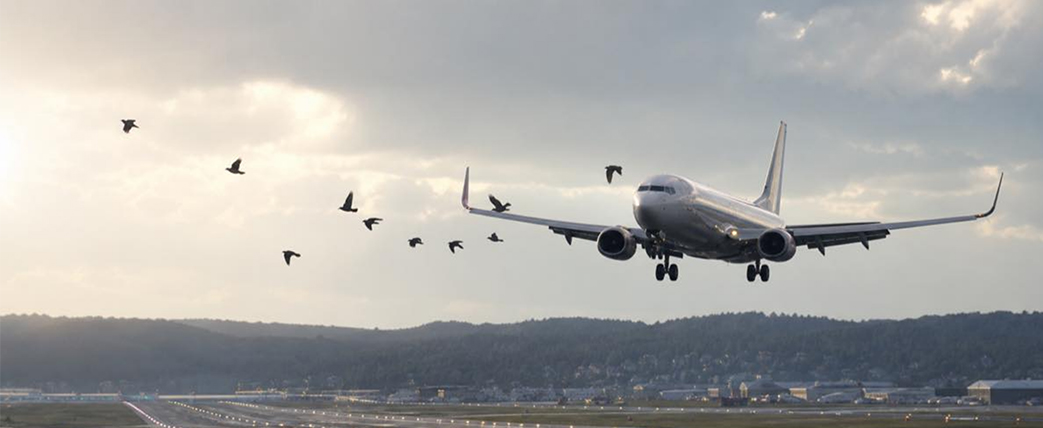
Bird strikes refer to incidents in which birds collide with aircraft or man-made structures.
They are an ongoing environmental and safety concern not only in aviation, but also across a wide range of infrastructure, including wind turbines, building glass, and roadside noise barriers.
-
-
Increasing Risk of Bird Strikes
Bird-strike incidents in Korea continue to rise, posing a direct risk to aviation safety and infrastructure operations.
Bird strikes can cause airframe and engine damage, flight delays, and increased repair and insurance costs, and in severe cases, may result in fatal accidents.
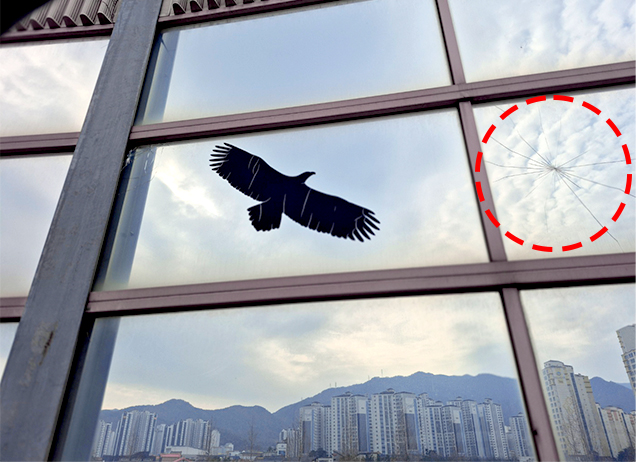
◀Bird strike next to a first-generation bird-collision prevention sticker on a transparent highway noise barrier in Korea
-
Limitations of Existing
Response TechnologiesAround airports, physical bird-deterrent methods such as ultrasonic devices, acoustic deterrents, and drones, as well as bird-detection radar systems, are commonly used.
However, these technologies primarily focus on detecting birds or driving them away from specific areas around airports. They have limitations in providing the collision-prone object itself—such as an aircraft, building, wind turbine, or noise barrier—with a function that helps birds recognize the risk in advance.
In particular, there is a growing need for a new approach to functional materials and coating technologies that can be applied directly to aircraft surfaces to help prevent bird strikes.
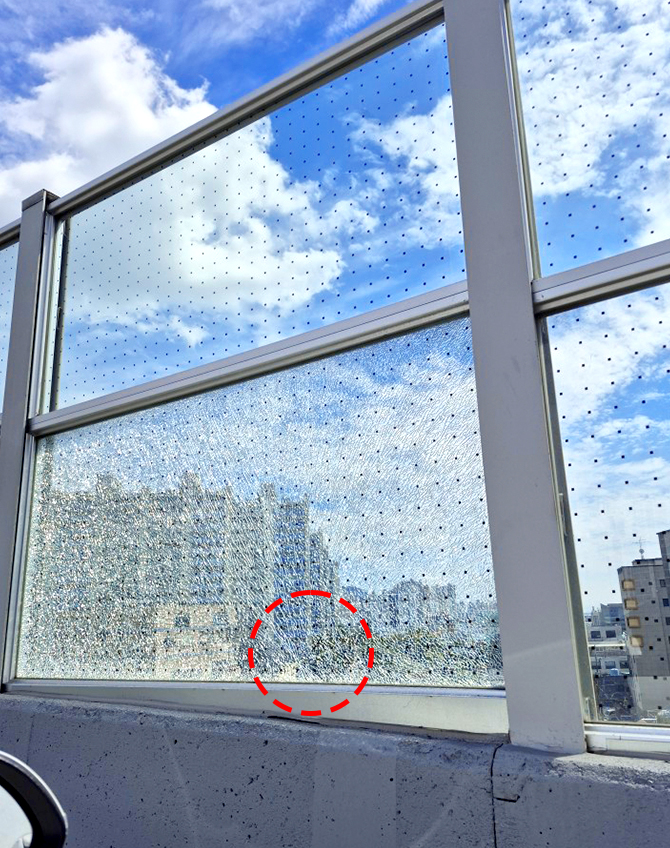
Bird strike on a transparent highway noise barrier in Korea
(second-generation bird-collision prevention sticker)▶ -
The Need for
High-Performance Coatings
and New Prevention Technologies
High-performance specialty coatings used on aircraft, wind turbines, and other infrastructure require exceptional durability, weather resistance, and material reliability. In Korea, these markets remain highly dependent on products supplied by global manufacturers.
By integrating bird-strike prevention functionality into existing coatings and films, this technology can provide a new approach to prevention—not by adding large-scale equipment, but by adding new functionality directly to the surfaces of existing infrastructure.
Global Market
and Industry Demand
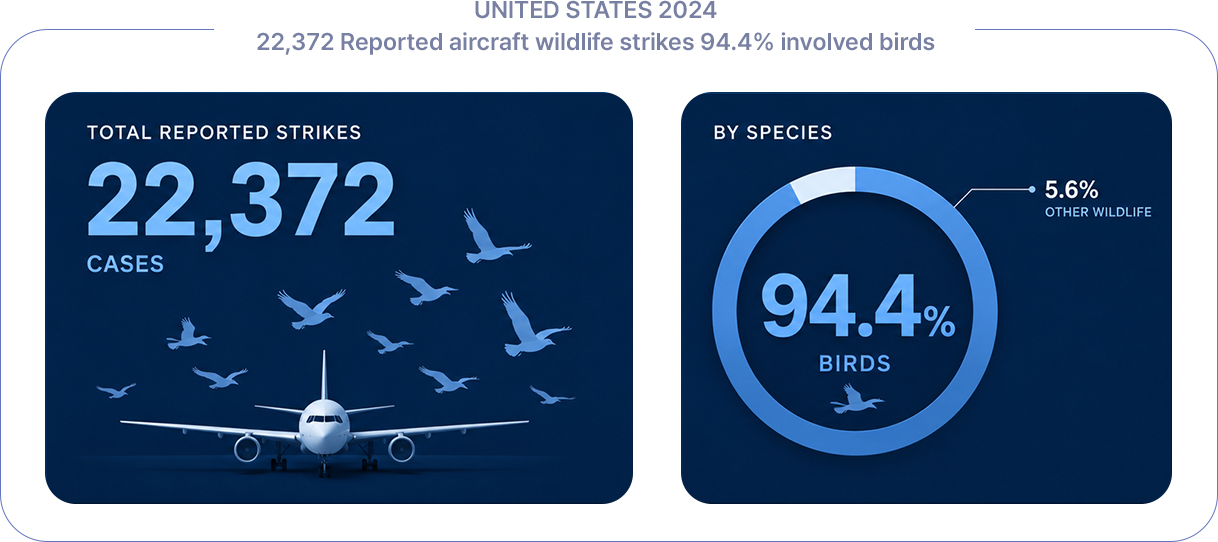
Bird strikes impose a significant economic burden on the global aviation industry through aircraft repair costs, flight delays, insurance expenses, and safety-related risks.
At the same time, the market for high-performance aerospace coatings and exterior aircraft coatings continues to grow. Major airlines, airport operators, aircraft manufacturers, and military aviation organizations are increasingly seeking more proactive and sustainable technologies to reduce the risks associated with bird strikes.
“We took another look at
the world through the eyes of a bird.”
-
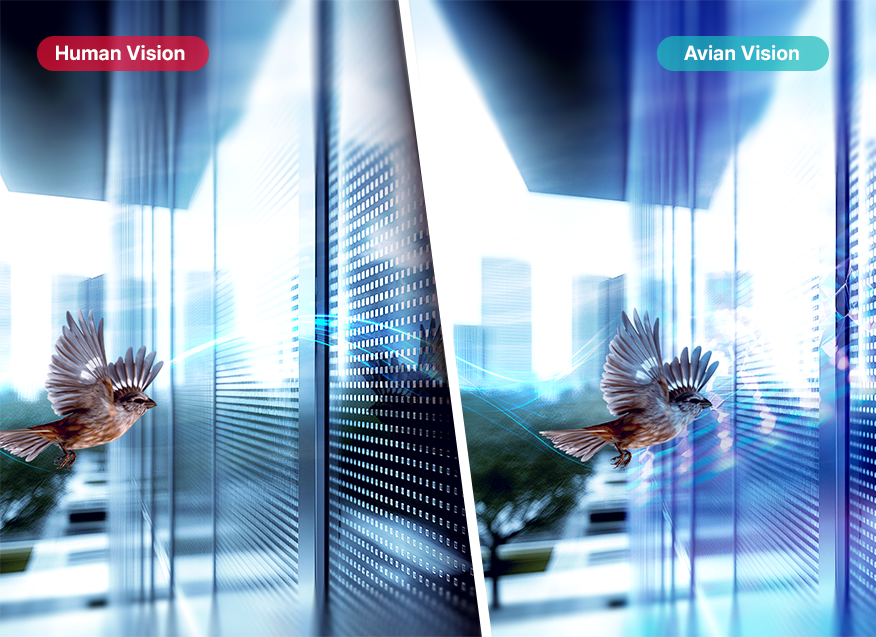
Humans and birds see the world differently. The human eye primarily perceives visible light, while many birds can see a broader range of colors, with some species also able to detect ultraviolet (UV) light.
As a result, surfaces or objects that may look similar to humans can appear very different to birds.
Birds use these visual abilities to find food, recognize other birds, and navigate their surroundings. Some species have highly developed vision that allows them to quickly identify objects or prey from great distances.
Many birds also have a wide field of view. However, because the position of their eyes and the structure of their vision differ from those of humans, they may perceive distance and obstacles differently.
By understanding how birds see the world, we can develop technologies that help them recognize man-made structures—such as aircraft, building glass, wind turbines, and roadside noise barriers—earlier and more clearly.
The same surface to humans can provide entirely different visual information to birds.
-
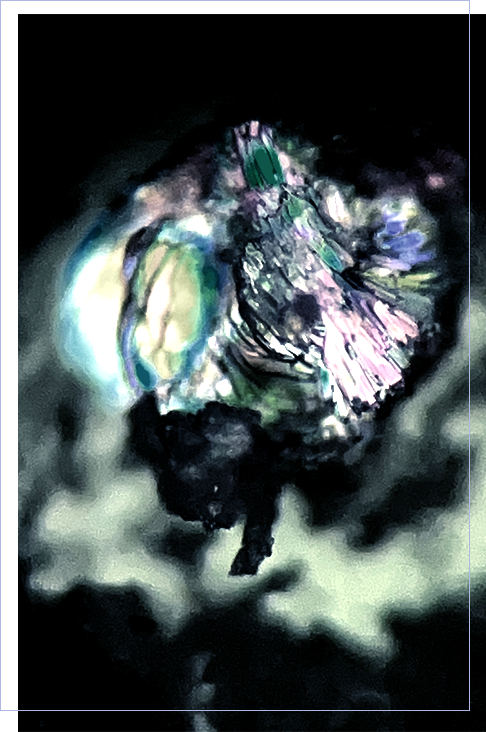 ▲ Crystal Polarizing Microscope (X 900 ~ 1200)
By understanding how birds see the world, we can develop technologies that help them recognize man-made structures—such as aircraft, building glass, wind turbines, and roadside noise barriers—earlier and more clearly.
The same surface to humans can provide entirely different visual information to birds.
We translated the principles
of nature into technology.
USC Innovation-Mimetic Science & Technology.
USC technology is a nature-inspired bird-strike prevention
technology developed by studying how birds perceive
the world around them.
We scientifically analyzed birds’ visual and behavioral characteristics, including their feeding behavior, ability to perceive ultraviolet (UV) light, wide field of view, and unique way of judging distance, and applied these insights to technology development.
-
Through this process, we identified USC (Urinary Sediment Crystal) as a functional material capable of influencing visual recognition and response in birds. Over approximately three years, we developed purification, crystallization, and liquefaction processes to transform USC into a functional additive that can be incorporated into a variety of materials.
USC additives can be applied to coatings and films, with the goal of preserving the existing appearance and function of surfaces for people while providing birds with additional visual information that helps them recognize structures earlier.
This technology offers a new approach to bird-strike prevention by encouraging birds to detect and avoid man-made structures such as aircraft, building glass, wind turbines, and roadside noise barriers before a collision occurs.
Rather than driving birds away, USC technology is designed to understand how birds see and help them recognize and avoid potential hazards on their own.
▶ Crystal Polarizing Microscope (X 900 ~ 1200)
-
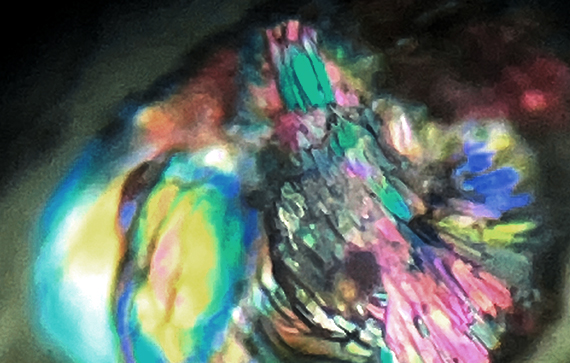 ▶ Crystal Polarizing Microscope (X 900 ~ 1200)
USC Bird-Collision Prevention Technology
Specialized Coatings and Functional Films (Stickers)
The key technology that translates the visual characteristics
of birds described above into practical products is USC (Urinary Sediment Crystal).
-
A New Visual Signal Discovered
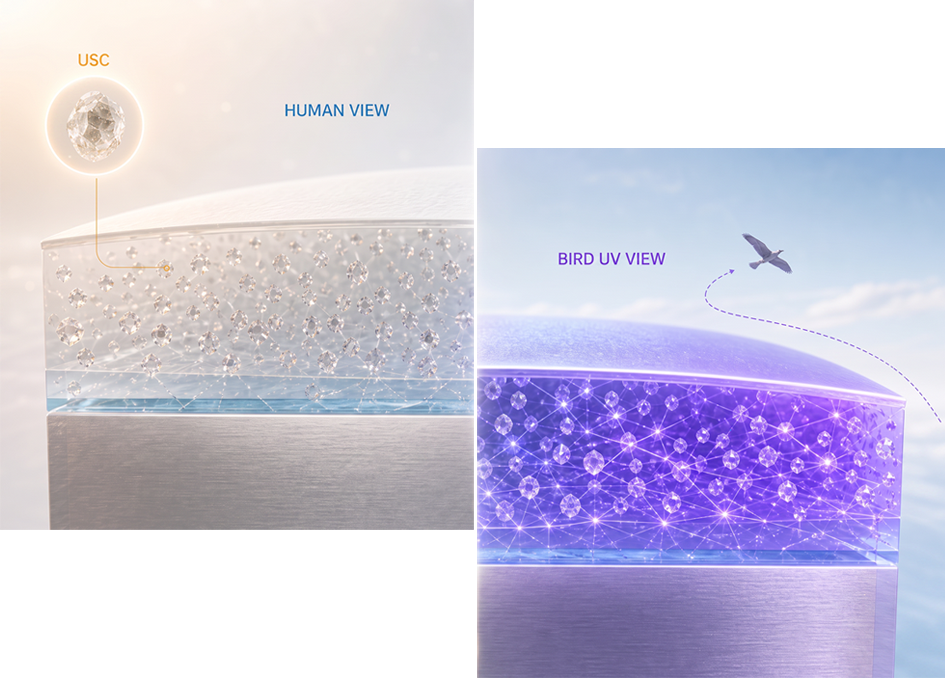
in Biological MaterialsUSC is a functional material developed by separating and purifying epithelial cells and specific crystalline components from bio-derived materials.
Rather than simply relying on substances that strongly reflect ultraviolet light, USC was developed by focusing on the biological and optical characteristics involved in birds’ foraging behavior and visual perception.
By incorporating the distinctive optical properties created by USC’s crystal structure into coatings and films, the technology aims to preserve the original appearance and function of surfaces for humans while providing birds with additional visual information that helps them distinguish structures more clearly.
-
-
Beyond Simple UV Reflection
USC technology goes beyond simply reflecting ultraviolet (UV) light. During development, bio-derived USC was compared with chemically similar materials while observing birds’ recognition and avoidance behaviors.
Birds showed clearer recognition and avoidance responses under USC-treated conditions, while comparable responses were not observed at the same level with similar materials. These findings suggest that USC’s unique material properties, beyond UV reflection alone, may play an important role in avian visual perception and behavioral response.
From One Additive to Multiple Products
USC is a functional additive platform that can be incorporated into existing manufacturing processes and expanded into specialized coatings, transparent films, and bird-collision prevention markers.Rather than replacing existing infrastructure, USC adds bird-recognition functionality directly to existing surfaces.
One USC material. Multiple products. Diverse infrastructure.
-
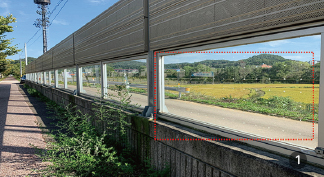
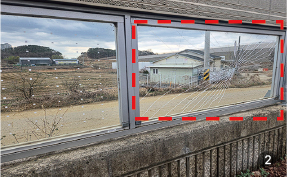
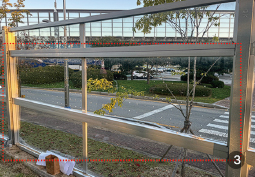 Osan, Republic of Korea - Field Test Site Ver. 1
1. Our Functional Film (Sticker) Applied 2. Bird Strike Occurred Adjacent to the Treated Area 3. Our Functional Film (Sticker) Applied
Technology Development & Validation
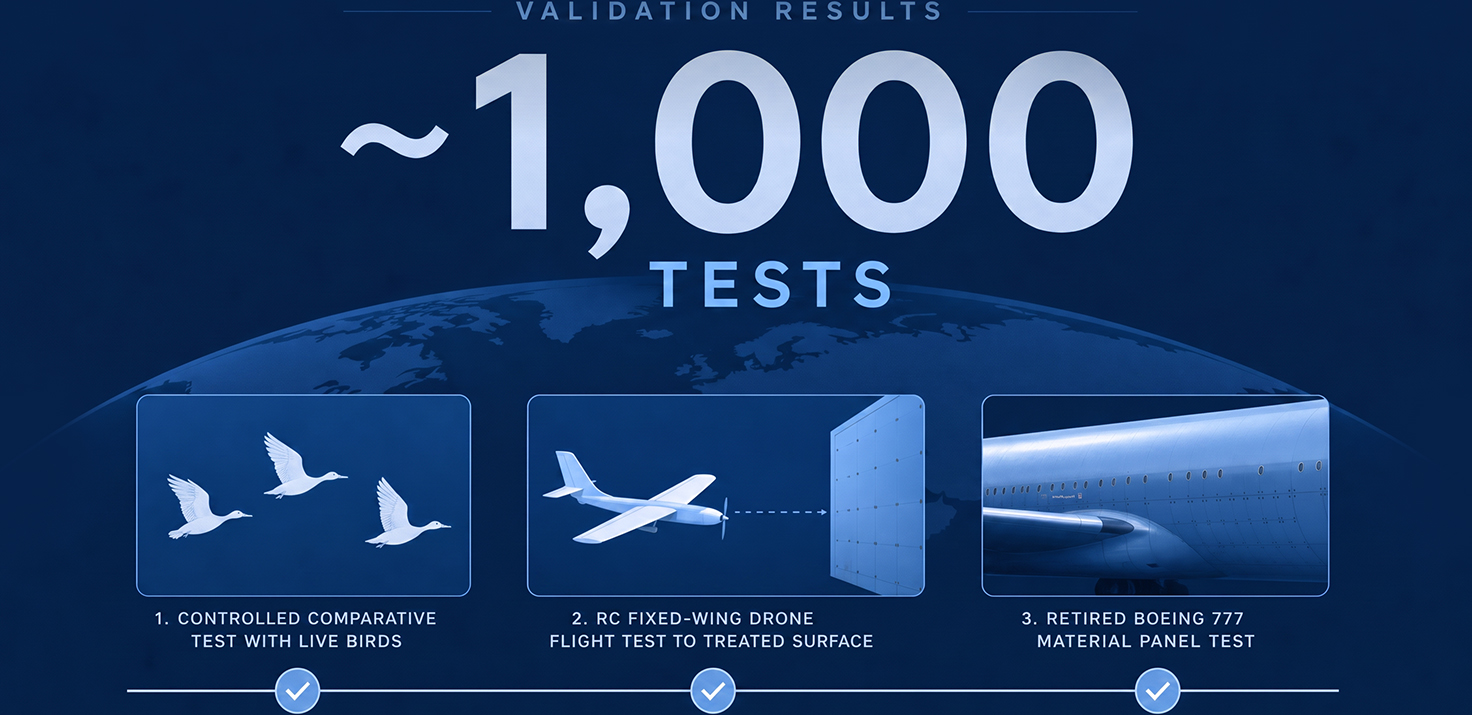
USC technology has been validated step by step, moving beyond material development through optical characterization → control-group comparison → avian behavioral response testing → outdoor field validation → evaluation for application to aircraft materials.
Across a variety of test environments, early recognition and collision-avoidance behaviors in birds were observed. To date, USC-applied collision-prevention tests have recorded zero collisions under the tested conditions.
In addition, when USC was applied to specific areas such as utility poles, rooftops, and building structures, birds were observed avoiding approach and landing. These results indicate that USC may influence not only collision avoidance, but also approach- and landing-deterrent behavioral responses in treated areas.
Seeing Surfaces Through a Bird’s Eyes
The starting point of USC technology was the recognition that humans and birds can perceive the same surface differently.
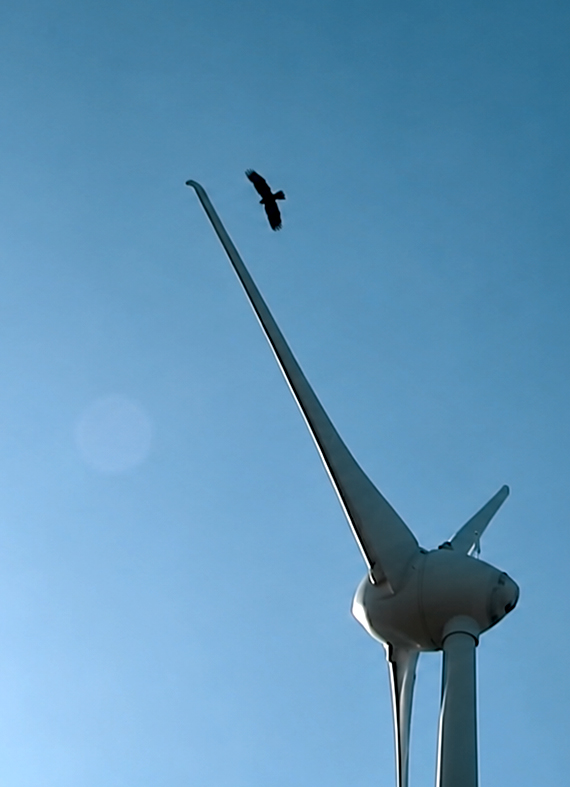
Using structures such as wind turbine blades, we examined the optical differences before and after USC application and evaluated how USC-treated surfaces can be distinguished under ultraviolet (UV) conditions.
While the surfaces may appear similar to the human eye, USC-treated areas are designed to create distinct visual information under specific optical conditions.
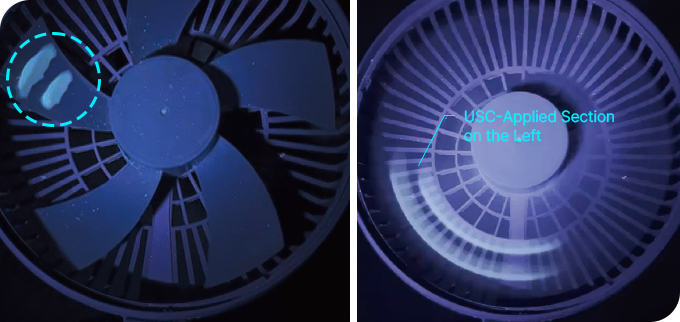 ※ Experiment Ver. 2: Rotational Test with USC Special Coating Partially Applied
Verification of UV Optical Properties of USC Coatings
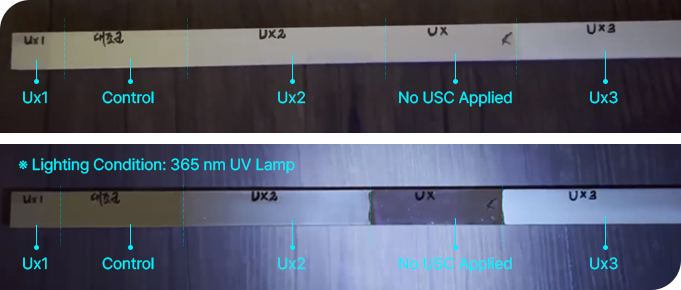
To evaluate the optical properties of USC-enhanced coatings under different application conditions, repeated coating tests were conducted under 365 nm UV light.
Surfaces with one, two, and three coating layers were compared, using a transparent urethane coating without USC as the control. This allowed us to evaluate the visual differences according to the presence of USC and the amount of coating applied.
- ㆍ Ux1: 1 coat of USC coating
- ㆍ Ux2: 2 coats of USC coating
- ㆍ Ux3: 3 coats of USC coating
- ㆍ Control: Transparent coating without USC
- ㆍ UV Condition: 365 nm
Comparative Testing of Avian Behavioral Responses
To evaluate changes in bird behavior following USC application, repeated tests and field observations were conducted using unmanned aircraft, drones, noise barriers, and various structures.
Across approximately 1,000 tests and field validations, bird behaviors—including approach, avoidance, landing, and collision—were compared between USC-treated and untreated control conditions.
In USC application tests specifically conducted for bird-collision prevention, zero collisions were recorded, resulting in 100% collision prevention under the tested conditions.
When USC was applied to areas where bird approach or landing needed to be discouraged, such as utility poles, power poles, and rooftops, birds were observed avoiding the treated areas rather than approaching or landing on them.
These results indicate that USC may go beyond preventing collisions at the point of impact by helping birds recognize treated areas in advance and inducing avoidance or approach-deterrent behavioral responses.
Indoor Flight Test of the Improved USC Coating
Based on the results of the behavioral test, the USC coating was further refined and additional testing was conducted in an indoor flight environment where birds could choose between two flight directions.
During the test, we observed how the birds perceived the USC-treated surface and the control surface, and how they selected their flight path.
Video analysis confirmed behavior in which birds recognized the USC-treated surface and changed their flight path toward the opposite direction. Based on these findings, we continued to refine the material and application conditions.
Long-Term Outdoor Field Validation on Roadside Noise Barriers
Beyond laboratory testing, USC was also evaluated under real-world outdoor conditions.
A field validation study was conducted for approximately four years on roadside noise-barrier glass, comparing bird collision occurrences between USC-treated sections and untreated control sections.
USC coatings and films were applied at the test sites, and bird collision occurrences were continuously monitored under actual weather and outdoor environmental conditions.
Aircraft Exterior
Material Application Test
-
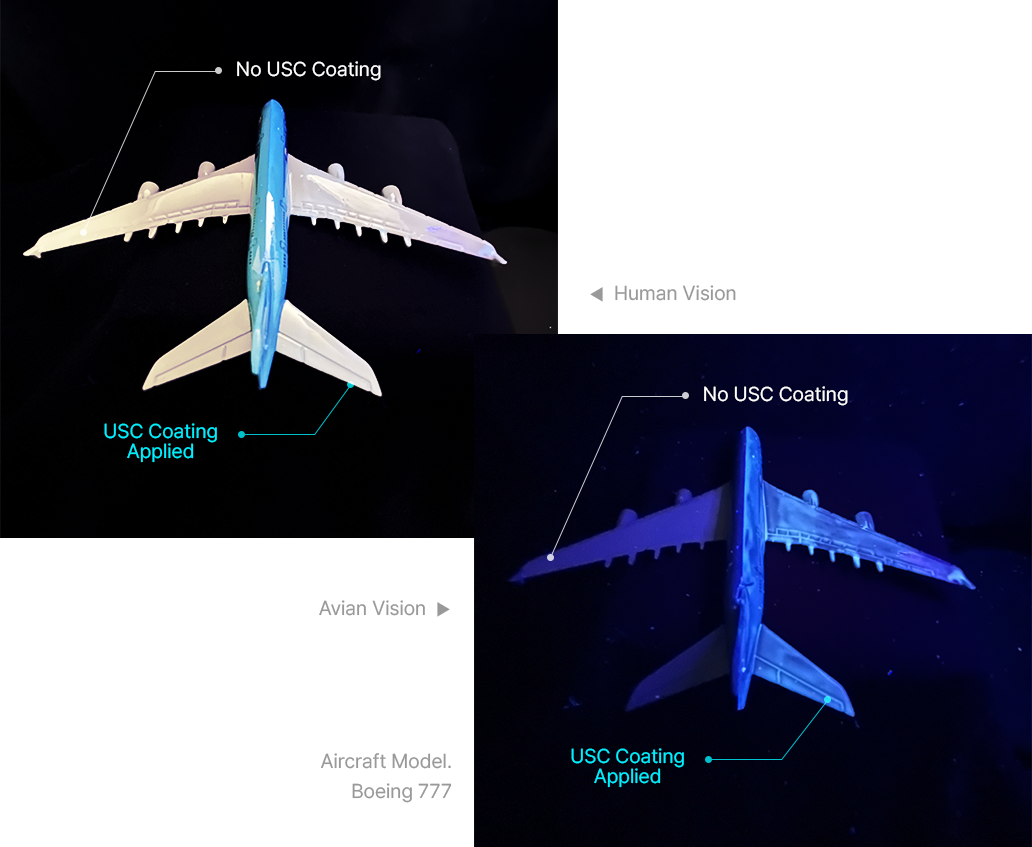
To evaluate the potential application of USC technology in the aviation sector, tests were conducted using actual fuselage skin and exterior materials obtained from an aircraft.
USC coating was applied directly to Boeing 777-200ER exterior materials, and the appearance and optical characteristics of the USC-treated and untreated surfaces were compared under both normal lighting and UV conditions.
The results confirmed that USC’s optical properties could be incorporated into aircraft exterior surfaces without significantly altering the aircraft’s original appearance, providing a technical foundation for potential application to aircraft exterior coatings and related aviation applications.
-
From Experiment
to Real-World
Infrastructure
What differentiates USC is not simply a change in color or a surface marking, but its ability to provide new visual information on existing surfaces by utilizing the visual characteristics of birds.
The goal is to maintain an appearance similar to conventional coatings for humans, while providing birds with additional visual information that helps them recognize structures earlier.
USC has been developed step by step through indoor behavioral testing, control-group comparisons, long-term outdoor field validation, and moving-object tests. Its application is now being expanded to a wide range of infrastructure, including aircraft, airport facilities, architectural glass, wind turbines, and roadside noise barriers.
We validate what begins as a possibility in the laboratory under real-world conditions—and expand it into real infrastructure.
Potential Applications
in Airports and Aviation
USC technology is a bird-collision prevention technology designed for application to airport facilities, aircraft, and other aerial vehicles. It provides visual information that helps birds recognize approaching objects or structures in advance and avoid them voluntarily.
Aircraft and Aerial Vehicles
For aircraft and other aerial vehicles, USC is intended to help birds recognize the presence of an approaching object early enough to change their flight path and avoid it. The goal is to encourage avoidance behavior before birds and aircraft come into close proximity.
Airport Facilities and Structures
USC can be applied to airport facilities such as fences, exterior walls, glass, and rooftops to help birds recognize structures and designated areas, thereby discouraging approach, landing, and collision. Functional performance can also be added through painting or coating without replacing existing infrastructure.
Rather than replacing existing bird detection, deterrence, and management systems, USC is intended to complement them as a passive preventive measure that supports birds’ own recognition and avoidance behavior.
So birds can see earlier,
decide earlier, and avoid earlier.
From Infrastructure to Aircraft
USC applications are not limited to fixed structures. Because aircraft travel at high speeds, preventing bird strikes requires more than last-moment avoidance. It is important for birds to recognize an approaching aircraft from a sufficient distance and voluntarily change their flight path in advance.
USC technology aims to provide additional visual information on aircraft exterior surfaces that birds can distinguish, supporting early recognition and voluntary avoidance behavior. In tests and observations using actual aerial vehicles, birds were repeatedly observed changing their approach path or avoiding USC-treated targets after recognizing them. Depending on the bird species and flight and environmental conditions, avoidance behavior was observed in some cases from several kilometers away.
These observations support USC’s concept of Early Avoidance—helping birds recognize and avoid aircraft while sufficient separation still remains, rather than relying on a reaction immediately before collision. Because USC can potentially be integrated with existing aircraft paint and topcoat systems rather than requiring additional external devices, the technology also has potential for expansion into the commercial aviation and MRO sectors.
EARLY RECOGNITION → EARLY AVOIDANCE → COLLISION RISK REDUCTION
Expanding
into Wind Energy
and Ecological Environments
USC technology is being evaluated not only for aviation applications, but also as a preventive approach to reducing bird-collision risks associated with wind energy facilities.
As wind power expands, it is important to consider not only energy efficiency, but also the potential impact on birds, habitats, and surrounding ecosystems. In particular, bird-collision risks involving wind turbine blades and related structures are among the key ecological factors considered in environmental impact assessments.
Rather than modifying the structure of existing wind energy facilities or installing additional large-scale equipment, USC bird-collision prevention coatings are designed to provide additional visual information on the surfaces of blades and related structures that birds can perceive.
Through this approach, USC is being explored as one of the preventive and mitigation technologies that may help support both the expansion of renewable energy and the conservation of ecological environments.
A New Option for Reducing
Environmental Impact
Bird-collision prevention technology that supports
both renewable energy expansion and ecological conservation
-
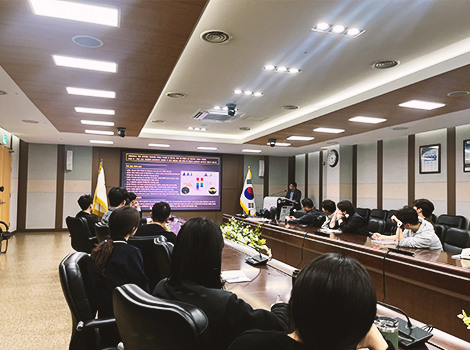
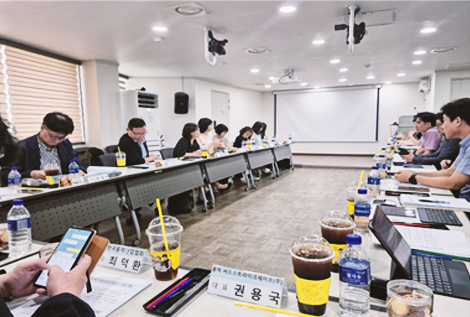
At a July 24, 2025 meeting on the renewable energy power industry, participants discussed the need for environmental impact assessments and practical mitigation measures that balance environmental conservation with the expansion of renewable energy projects such as wind and solar power.
In particular, for projects where bird-collision risks are anticipated, attention is increasingly shifting beyond simply identifying the presence of risk toward evaluating preventive and mitigation technologies that can meaningfully reduce that risk.
In this context, surface-applied technologies such as bird-collision prevention coatings may be considered one potential technical mitigation measure for reducing collision risks while preserving the existing structure of wind energy facilities as much as possible.
-
Technology does not begin by replacing infrastructure.
It begins by adding
new functionality
to what already exists.
AIRPORT · AIRCRAFT · WIND ENERGY · ARCHITECTURE · ROAD INFRASTRUCTURE
USC adds new visual information for birds to the surfaces
of existing infrastructure, with the goal of creating safer environments
where human activity and bird movement can coexist.